24×7 Cab Booking

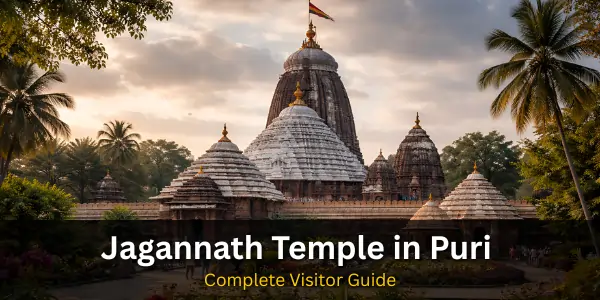
Every year, over 2 crore devotees visit the Jagannath Temple in Puri — making it one of the most visited religious sites in the world. Yet a surprising number of them arrive unprepared: wrong entry gate, carrying a mobile phone, wearing the wrong clothes, or showing up during a ritual break when darshan is closed.
First-time visitors to Shree Jagannath Temple Puri often describe the experience as overwhelming. The crowds are dense, the rituals are constant, and the rules are strict. Without preparation, you can spend more time confused at the gates than inside in darshan.
This guide gives you every practical detail you need — darshan timings by ritual slot, exact entry rules, dress code, what to carry, what to leave behind, the non-Hindu entry policy, where to stay near the temple, and how to reach Puri from different cities.
In this guide, you will discover how to plan your darshan efficiently, what rules the Shree Jagannath Temple Administration (SJTA) enforces in 2026, and how to reach the temple by road, rail, or air — without last-minute surprises.
The Jagannath Temple in Puri is one of the four sacred Char Dhams of Hinduism — the other three being Badrinath, Dwarka, and Rameshwaram. It stands on Nilachal Hill in the ancient city of Puri, Odisha, and is dedicated to Lord Jagannath, a form of Lord Vishnu, meaning "Lord of the Universe."
The Jagannath Temple in Puri, also called Shree Jagannatha Temple or Srimandir, is a 12th-century Hindu temple in Puri, Odisha. It was built by King Ananta Varman Chodaganga Deva of the Ganga Dynasty around 1135 AD. The temple is one of the four Char Dhams of Hinduism. It is dedicated to Lord Jagannath, Lord Balabhadra, and Goddess Subhadra.
The present structure of the Jagannath Temple was built by King Ananta Varman Chodaganga Deva, founder of the Eastern Ganga Dynasty, around 1135 AD. Construction was completed in 1230 AD under King Anangabhima Deva III, who also installed the three principal deities in the sanctum.
The temple follows the Kalinga architectural style — a distinct form of North Indian temple architecture seen across Odisha. The main tower (Vimana) rises 65 metres (214 feet) above ground. At the top sits the Nilachakra — a blue wheel made of eight metals (ashtadhatu) — which devotees consider sacred. The flag on top of the Nilachakra is changed every single day at sunset by a priest who climbs the 65-metre outer wall barefoot, without any safety equipment. This ritual has continued for over 800 years without interruption.
The three main deities — Lord Jagannath, Lord Balabhadra, and Goddess Subhadra — are made of neem wood, not stone or metal. This is unique among major Hindu temples. The idols are replaced every 8, 11, 12, or 19 years in a ritual called Nabakalebara, which means "new embodiment." The old idols are buried in the Koili Vaikuntha garden within the temple premises. The soul (Brahma) of the deity is said to transfer from the old idol to the new one in a ceremony performed in complete darkness by blindfolded priests.
Another widely noted fact: no shadow of the main temple tower falls on the ground at any time of day. No birds are seen sitting on or flying over the spire. The sound of ocean waves from the nearby sea disappears once you step inside the main gate — and returns the moment you step out.
Darshan at the Jagannath Temple is not continuous throughout the day. The temple opens and closes multiple times based on rituals. Arriving without knowing this means you could reach the gate and find darshan unavailable.
Jagannath Temple in Puri opens at 5:00–5:30 AM daily. Darshan is available in multiple slots throughout the day, separated by ritual breaks. The temple closes around 10:30–11:00 PM. Darshan is NOT available during ritual breaks — notably after Gopala Ballava Puja (around 9 AM) and during Madhyanha Pahuda (1:00–2:00 PM). The best time for less crowded darshan is early morning before 9 AM or late evening after 8 PM.
Practical tip: The best darshan slots for first-time visitors are the 7:00–8:00 AM window (Sahanamela) or after 8:00 PM (Chandana Lagi). Both have relatively manageable crowds compared to midday.
The Jagannath Temple in Puri has some of the most specific entry rules among major Hindu temples in India. These are enforced strictly by temple security and SJTA personnel.
Non-Hindus are not permitted to enter the Jagannath Temple in Puri. This rule applies to all non-Hindus regardless of nationality. Mobile phones, cameras, leather items, shoes, umbrellas, and handbags are not allowed inside. Entry is free of charge. The main entrance for devotees is the Singha Dwara (Lion's Gate) on the east side.
Non-Hindu visitors can view the Nilachakra and the temple exterior from the Raghunandan Library viewing platform on the opposite side of the Grand Road. Temple officials often guide visitors there.
Free cloak rooms are available outside the Singha Dwara. They provide bags to store your belongings and issue a token for collection on exit. Senior citizens and differently-abled visitors can access free battery-operated vehicles from Market Square to the North Gate. Wheelchairs and ramps are also available at the complex.
Most visitors focus entirely on darshan and miss the architectural and historical significance of what surrounds them. Understanding the temple's layout improves the experience significantly.
The Jagannath Temple in Puri covers an area of 400,000 square feet within two concentric boundary walls. The inner wall (Kurma Prachira) and outer wall (Meghanada Prachira, 20–24 feet high) enclose over 120 shrines and sub-temples. The main complex has four sections: Vimana (main tower), Jagamohana (prayer hall), Nata Mandapa (dance hall), and Bhoga Mandapa (offerings hall).
The outer wall has four gates, each facing a cardinal direction:
Above the Singha Dwara, a single image of Lord Jagannath called Patitapabana is carved into the gate. This is placed here specifically so that devotees who cannot enter the temple — for any reason — can still have darshan of the Lord from outside.
No visit to the Jagannath Temple is complete without Mahaprasad. This is not just temple food — it is a cultural and spiritual institution unique to Puri.
Mahaprasad is the sacred food cooked in the Jagannath Temple kitchen (Roshaghara) and offered to the deities before being distributed to devotees. It is first offered to Goddess Vimala in the Vimala Temple, after which it becomes Mahaprasad. It is available at the Ananda Bazaar inside the temple complex. Items include rice, dal, sabji, and a variety of traditional Odia sweets.
The kitchen operates 365 days a year without interruption. Even on days of heavy rain or cyclone warnings, the kitchen continues. The traditional cooking method — earthen pots stacked on top of each other over a single fire, with the top pot cooking first — has never been changed or mechanised.
One important note for visitors: the Mahaprasad is eaten while sitting on the ground at the Ananda Bazaar, without shoes. It is considered sacred and is eaten without complaints about taste or quality. This is part of the tradition.
Accommodation within walking distance of the temple fills up weeks in advance during peak season and Rath Yatra. This is especially critical if you are visiting during the July festival, when vehicle access near Grand Road is restricted.
The Shree Jagannath Temple Administration (SJTA) operates three official pilgrim accommodations near the temple: Neeladri Bhakta Niwas, Shree Gundicha Bhakta Niwas, and Nilachal Bhakta & Yatri Niwas. All three are affordable and close to the temple. Online bookings can be made at the official SJTA accommodation portal: accomodation.jagannath.nic.in.
For private hotels, the areas around Swargadwar Beach, Chakratirtha Road, and the Grand Road stretch offer options across all budgets. Book at least 4–6 weeks ahead in winter and 8–10 weeks ahead for Rath Yatra.
The Jagannath Temple is located on Grand Road (Bada Danda), Puri — about 2.8 km from Puri Railway Station and 1.9 km from the Puri Bus Stand.
AEO Answer Block: The nearest airport to Jagannath Temple Puri is Biju Patnaik International Airport, Bhubaneswar — 61 km away. The nearest railway station is Puri Railway Station — 2.8 km from the temple. By road, Puri is connected via NH 316 from Bhubaneswar and NH 16 from Kolkata and Visakhapatnam. Cab services and auto-rickshaws are available from all three points.
Fly into Biju Patnaik International Airport, Bhubaneswar. Daily flights from Delhi, Mumbai, Kolkata, Hyderabad, Chennai, and Bengaluru connect to Bhubaneswar. From the airport, a cab to Puri takes approximately 1.5 hours under normal conditions.
Puri has a dedicated railway station — Puri Railway Station (Station Code: PURI) — with direct trains from Kolkata (Howrah), Delhi, Mumbai, Chennai, and other major cities. The station is 2.8 km from the Jagannath Temple.
Road travel offers the most flexibility, particularly for groups and families who want to combine Puri with Konark, Bhubaneswar, and Chilika Lake.
Key road routes with cab options:
For groups of 9 to 25 people, a tempo traveller is significantly more practical than multiple cab bookings — especially during Rath Yatra when parking near Grand Road is restricted. A group arriving in one vehicle also navigates temple-area crowd management more easily than multiple cars.
These are the most common mistakes visitors make at the Jagannath Temple in Puri, based on patterns observed across multiple visitor accounts and guides.
First-time visitors to Jagannath Temple Puri should know: deposit mobile phones and leather items at the free cloak room before entering. Enter through Singha Dwara (east gate). Avoid visiting during ritual breaks (9 AM and 1–2 PM). Best darshan slots are before 9 AM or after 8 PM. The temple is closed to non-Hindus. Entry is free.
Neither competitor covers the 2025 Dhadi Darshan queue system update. Neither explains that darshan availability changes by slot within a single day. Neither gives a practical guide to the Mahaprasad experience. These are the real questions first-time visitors have — and this guide answers them.
The Jagannath Temple observes 12 major festivals annually, collectively called Dvadasa Yatras. The most significant for pilgrims and travellers are:
Planning around a festival? Read our month-by-month breakdown: Best Time to Visit Puri Odisha
The Jagannath Temple in Puri is not a standard temple visit. It is an active, living sacred institution with a precise daily rhythm of rituals, offerings, and darshan windows. Arriving prepared — knowing the timings, the rules, the right entry gate, what not to carry, and where to stay — changes the experience entirely.
Three things to remember: enter through Singha Dwara, arrive before 9 AM or after 8 PM for the best darshan, and leave your mobile and leather items at the free cloak room outside. Everything else becomes manageable once these basics are in place.
If you are combining your temple visit with the Rath Yatra or timing your trip around a specific season, plan at least 2–3 months in advance. Road access near Grand Road changes significantly during festivals.

 Tirupati to Hyderabad Distance: Travel Time, Routes & Best Way to Travel
September 17, 2026
Tirupati to Hyderabad Distance: Travel Time, Routes & Best Way to Travel
September 17, 2026
 Pune to Aurangabad Distance: Complete Travel Guide & Route Info
September 05, 2026
Pune to Aurangabad Distance: Complete Travel Guide & Route Info
September 05, 2026
 Tirupati to Bangalore Distance: Route & Travel Guide
August 29, 2026
Tirupati to Bangalore Distance: Route & Travel Guide
August 29, 2026
 Coimbatore to Bangalore Distance by Car, Bus & Train – Complete Guide
July 21, 2026
Coimbatore to Bangalore Distance by Car, Bus & Train – Complete Guide
July 21, 2026
 Bangalore to Tirupati Distance: Complete Road Trip Guide
July 15, 2026
Bangalore to Tirupati Distance: Complete Road Trip Guide
July 15, 2026
 Pune to Bhimashankar Distance, Route, How to Reach & Travel Guide
July 07, 2026
Pune to Bhimashankar Distance, Route, How to Reach & Travel Guide
July 07, 2026
 Hyderabad to Tirupati Distance: Route Guide, Travel Time & Best Way to Travel
June 27, 2026
Hyderabad to Tirupati Distance: Route Guide, Travel Time & Best Way to Travel
June 27, 2026
 Best Time to Visit Puri Odisha: Month-by-Month Guide for Every Traveller
June 11, 2026
Best Time to Visit Puri Odisha: Month-by-Month Guide for Every Traveller
June 11, 2026
 Kolkata to Digha Distance: Complete Road Trip & Travel Guide
May 29, 2026
Kolkata to Digha Distance: Complete Road Trip & Travel Guide
May 29, 2026
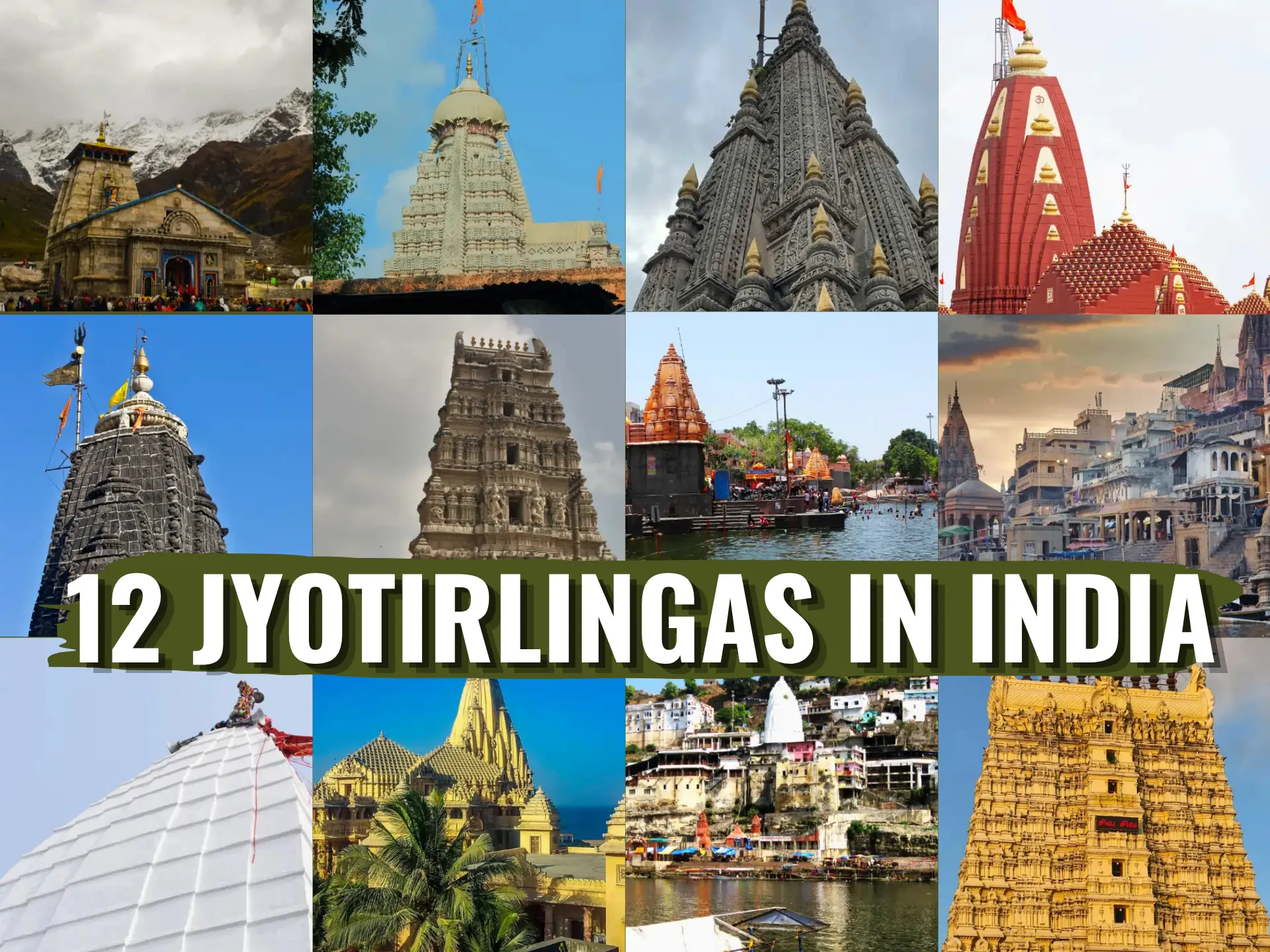 12 Jyotirlingas in India: Complete Guide to Locations, Significance & How to Reach Them
May 22, 2026
12 Jyotirlingas in India: Complete Guide to Locations, Significance & How to Reach Them
May 22, 2026

0 Comments
No comments yet. Be the first to share your thoughts!
Leave a Comment