12 Jyotirlingas in India: Complete Guide to Locations, Significance & How to Reach Them
Published on 22-May-2026 12:58 PM Explore: Spiritual Places in India
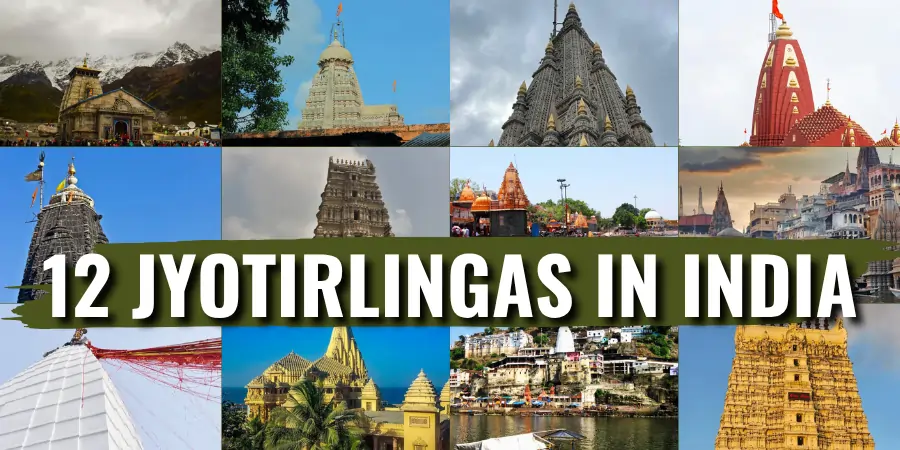
The 12 Jyotirlingas in India are sacred Shiva temples spread across 9 states. They are: Somnath (Gujarat), Mallikarjuna (Andhra Pradesh), Mahakaleshwar (Madhya Pradesh), Omkareshwar (Madhya Pradesh), Kedarnath (Uttarakhand), Bhimashankar (Maharashtra), Kashi Vishwanath (Uttar Pradesh), Trimbakeshwar (Maharashtra), Vaidyanath (Jharkhand), Nageshwar (Gujarat), Rameshwaram (Tamil Nadu), and Grishneshwar (Maharashtra). Visiting all 12 is considered one of the most spiritually significant pilgrimages in Hinduism.
India is home to hundreds of Shiva temples. But only 12 hold the highest status — the Jyotirlingas.
These are the points where Lord Shiva is believed to have manifested as a column of light (jyoti = light, linga = form). For millions of Hindu devotees, completing a pilgrimage to all 12 Jyotirlingas is a lifetime ambition — one that takes you across the length and breadth of the country, from the Himalayas to the southern tip of the Indian subcontinent.
This guide covers every Jyotirlinga location in India, state-wise breakdown, travel planning tips, how to reach each by road, and the best way to plan your yatra — whether you're visiting one or all twelve.

What Are the 12 Jyotirlingas?
The 12 Jyotirlingas are the most sacred manifestations of Lord Shiva in Hinduism. According to Hindu scripture, these are places where Shiva appeared as an infinite pillar of light — jyotirlinga — to settle a dispute between Brahma and Vishnu.
Each Jyotirlinga is distinct in name and form, representing a different aspect of Shiva's divine energy. Darshan at these temples is believed to grant liberation (moksha) and remove accumulated karmic debt.
The 12 Jyotirlingas are referenced in the Shiva Purana and have been pilgrimage destinations for thousands of years.
Complete List of 12 Jyotirlingas in India
12 Jyotirlingas: State-Wise Breakdown
Jyotirlingas in Maharashtra (3)
Maharashtra has the highest number of Jyotirlingas — three — making it a major pilgrimage state.
Bhimashankar is located about 110 km from Pune, in the Sahyadri hills. The temple sits inside a dense forest and is also part of a wildlife sanctuary. Road access from Pune takes approximately 3–4 hours.
Trimbakeshwar is 28 km from Nashik, near the origin of the Godavari River. It is one of the few Jyotirlingas with a three-faced linga representing Brahma, Vishnu, and Shiva. The Nashik-Trimbak highway makes it easily accessible.
Grishneshwar is located near Ellora Caves, about 30 km from Aurangabad (now Chhatrapati Sambhajinagar). Pilgrims often combine this with an Ellora or Ajanta visit, making it a strong cultural and religious combination trip.
Jyotirlingas in Madhya Pradesh (2)
Mahakaleshwar in Ujjain is one of the most visited Jyotirlingas in India. It is unique because it is a Dakshinamukhi linga — south-facing — which is considered especially powerful in Shaiva tradition. The daily Bhasma Aarti draws thousands of devotees every morning.
Omkareshwar sits on an island shaped like the Sanskrit symbol OM where the Narmada River splits and rejoins. The temple complex spans both the island and the mainland, and is accessible by boat or bridge from Khandwa, about 77 km away.
Jyotirlingas in Gujarat (2)
Somnath is considered the first and foremost among the 12 Jyotirlingas. Located at Prabhas Patan on the Arabian Sea coast, the temple has been destroyed and rebuilt 17 times through history. The current structure, rebuilt in 1951, is a powerful symbol of faith and resilience.
Nageshwar is located near Dwarka on the Gujarat coast, about 17 km away. It is believed to be the protector Jyotirlinga (Nagnath) that guards against all poisons.
Jyotirlinga in Uttarakhand (1)
Kedarnath is the highest Jyotirlinga at an altitude of 3,583 metres in the Garhwal Himalayas. The temple is open only from May to November due to extreme snowfall in winter. The trek to the temple from Gaurikund is about 16–18 km one-way, and helicopter services are also available from Phata, Sirsi, and Guptkashi.
Reaching Kedarnath requires road travel to Gaurikund via Rishikesh–Rudraprayag–Sonprayag. Many families and senior citizens prefer booking an outstation cab from Delhi, Haridwar, or Rishikesh to Gaurikund, as it allows flexibility with rest stops on this mountainous stretch.
Jyotirlinga in Uttar Pradesh (1)
Kashi Vishwanath in Varanasi is arguably the most famous Jyotirlinga. The newly expanded Kashi Vishwanath Corridor, completed in 2021, transformed access to the temple significantly. Varanasi is well connected by road, rail, and air, making it one of the most accessible Jyotirlingas.
The city's ghats — Dashashwamedh, Assi, and Manikarnika — are intrinsic to the pilgrimage experience here.
Jyotirlinga in Andhra Pradesh (1)
Mallikarjuna at Srisailam is located on the Nallamala hills, on the banks of the Krishna River. It is one of only two sites in India that are both a Jyotirlinga and a Shakti Peetha. Road access from Hyderabad is approximately 220 km via NH-44 and then the ghat road — a scenic but winding route.
Jyotirlinga in Jharkhand (1)
Vaidyanath (also called Baidyanath) is located in Deoghar, Jharkhand. It is believed to have healing powers — Vaidya means physician. During the Shrawan month (July-August), lakhs of Kanwariyas walk to Deoghar carrying Gangajal from Sultanganj, nearly 105 km away, in one of India's most intense religious traditions.
Jyotirlinga in Tamil Nadu (1)
Rameshwaram is located on Pamban Island, connected to mainland India by the Pamban Bridge over the Indian Ocean. The temple corridor here — over 1.2 km long — is the longest temple corridor in India. Rameshwaram holds dual religious significance as both a Jyotirlinga and part of the Char Dham circuit.
Where Are the 12 Jyotirlingas on the Map?

The 12 Jyotirlingas are spread across 9 states covering all major regions of India:
North: Kedarnath (Uttarakhand), Kashi Vishwanath (Uttar Pradesh)
West: Somnath, Nageshwar (Gujarat)
Central: Mahakaleshwar, Omkareshwar (Madhya Pradesh)
East: Vaidyanath (Jharkhand)
South: Mallikarjuna (Andhra Pradesh), Rameshwaram (Tamil Nadu)
West-Central: Bhimashankar, Trimbakeshwar, Grishneshwar (Maharashtra)
How to Plan a 12 Jyotirlinga Yatra
Visiting all 12 Jyotirlingas in one trip is possible but requires careful planning. Here's a practical approach:
Option 1: Regional Clusters (Recommended for First-Timers)
Group the temples by geography to minimise backtracking:
Cluster 1 — Maharashtra Circuit (3 temples) Bhimashankar → Trimbakeshwar (via Nashik) → Grishneshwar (via Aurangabad) Road distance: ~450 km circuit from Pune
Cluster 2 — Madhya Pradesh + Gujarat Circuit (4 temples) Ujjain (Mahakaleshwar) → Omkareshwar → Dwarka (Nageshwar) → Somnath Road distance: ~900 km circuit
Cluster 3 — North India Circuit (2 temples) Varanasi (Kashi Vishwanath) → Kedarnath Best done May–October for Kedarnath access
Cluster 4 — South + East Circuit (3 temples) Rameshwaram → Srisailam (Mallikarjuna) → Deoghar (Vaidyanath) Best combined with train travel for long southern distances
Option 2: IRCTC Jyotirlinga Special Train
IRCTC runs special pilgrimage train circuits covering multiple Jyotirlingas. These are cost-effective for solo travellers or large groups who prefer fixed itineraries.
Option 3: Private Cab Road Trip (Best for Families & Groups)
For regional clusters — especially Maharashtra, Madhya Pradesh, and North India — a private outstation cab gives you the most flexibility. You control departure times, stop for meals, and manage the pace of your yatra.
How to Reach the 12 Jyotirlingas
By Road (Cab / Private Car)
Road access is available to 11 of the 12 Jyotirlingas directly. Kedarnath is the exception — road travel ends at Gaurikund or Sonprayag, followed by a trek or helicopter.
For the Maharashtra cluster, road travel from Pune or Mumbai connects all three temples within a 2–3 day road trip. NH-48, NH-60, and state highways provide reasonable road quality.
For the Madhya Pradesh circuit, Ujjain–Omkareshwar is 77 km via NH-52, a smooth 2-hour drive. Indore acts as the base city for both.
For North India, the Varanasi–Prayagraj–Lucknow corridor is well-connected by NH-19. Kedarnath requires travel via Rishikesh → Devprayag → Rudraprayag → Sonprayag on NH-58 and NH-107.
Families and groups planning multi-temple road trips often book outstation cabs through services like HurryUp Cabs — especially for routes like Delhi to Kedarnath, Pune to Nashik, or Hyderabad to Srisailam where driving unfamiliar ghat roads can be stressful. A local driver familiar with the route adds safety and convenience on mountain and ghat stretches.
By Train
Most Jyotirlinga cities have nearby railway stations:
By Flight
Major Jyotirlinga destinations are served by nearby airports:
Somnath / Nageshwar → Diu Airport or Rajkot Airport
Mahakaleshwar / Omkareshwar → Indore Airport (~75 km)
Kashi Vishwanath → Lal Bahadur Shastri Airport, Varanasi
Grishneshwar → Aurangabad Airport
Mallikarjuna → Rajiv Gandhi International Airport, Hyderabad (~215 km)
Rameshwaram → Madurai Airport (~170 km)
Kedarnath → Jolly Grant Airport, Dehradun (~250 km)
Helicopter Services
Kedarnath has a well-established helicopter service from Phata, Sirsi, Guptkashi, and Agustamuni — operated by UCADA and private operators. Booking in advance is essential during peak May–June season.
Best Time to Visit the 12 Jyotirlingas
General rule: October to March is ideal for South and Central Indian Jyotirlingas. May to June (before monsoon) is ideal for Kedarnath.
Expert Travel Tips for the 12 Jyotirlinga Yatra
Dress code: Most temples require men to enter in dhoti or remove shirts in the inner sanctum. Carry a gamcha or dupatta.
Entry timings: Most Jyotirlinga temples open between 5–6 AM and close by 10–11 PM with afternoon breaks. Check specific timings before visiting.
Queue management: Temples like Kashi Vishwanath and Mahakaleshwar have long queues during festivals. Book darshan slots online wherever available.
Group travel: For groups of 8 or more, a tempo traveller is more practical than multiple cabs — lower per-head cost, easier coordination.
Pilgrimage documentation: Keep a Jyotirlinga Darshan Diary — many temples offer stamps confirming your visit, which pilgrims collect across all 12.
Mobile network: Kedarnath has limited BSNL/Jio coverage. Download offline maps before the trek.
Conclusion: Planning Your 12 Jyotirlinga Yatra
The 12 Jyotirlingas span an extraordinary range of India's geography — from the Himalayan snowfields of Kedarnath to the ocean-washed shores of Rameshwaram and Somnath. No two are alike in their setting, architecture, or spiritual character.
For most travellers, visiting all 12 in one trip is ambitious. A smarter approach is regional clusters — Maharashtra first, then Madhya Pradesh + Gujarat, then North India, then South + East — spread across 2–3 annual trips.
For road travel, private outstation cabs work best for North India and the Decplateau clusters. For long southern distances, combining train travel with local cab hire at the destination is more practical.
Plan Kedarnath strictly between May and October. Book accommodation and darshan slots for Kashi Vishwanath and Mahakaleshwar well in advance during festivals like Maha Shivaratri and Shrawan.
Frequently Ask Questions

Explore India
We provide insights and tips for unforgettable journeys. Click to explore destinations, attractions, and travel stories across India.
Scuba Diving Places in India
Best Seasons to Travel in India
What is Famous in India?
Airport Lounges in India
Weekend Getaways in India
Cycling in India
Beaches in India
UNESCO Heritage Sites
Wedding Destinations
Trekking Places in India
Best Places to Live in India
Flight Travel & Guides
Amusement Parks in India
Popular Waterfalls in India
List of Cities in India
Leave a Comment