Rameshwaram to Dhanushkodi Distance: Route, Travel Time & Complete Travel Guide
Published on 25-Mar-2026 11:27 AM Explore: HurryUp Cab Service
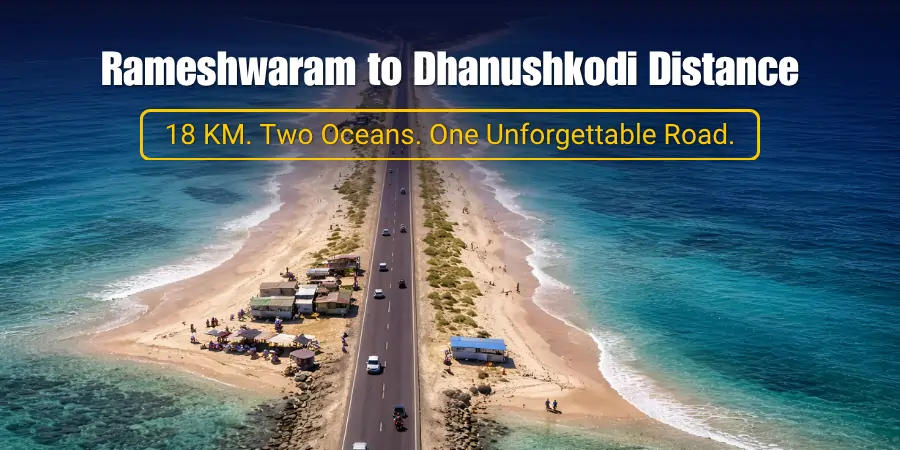
The Rameshwaram to Dhanushkodi distance is approximately 18 to 20 kilometres, depending on the exact starting point in Rameshwaram. Short as it is, this stretch of road ranks among the most unforgettable drives in India — flanked on both sides by the turquoise waters of the Bay of Bengal and the Indian Ocean, leading you from one of Hinduism's most sacred temple towns straight to the edge of the subcontinent. Whether you are a pilgrim completing your Rameshwaram darshan, a history enthusiast drawn to the ruins, or simply a traveller chasing dramatic landscapes, this route delivers something rare: devotion, history, and raw coastal beauty packed into less than half an hour on the road.
Rameshwaram to Dhanushkodi Distance: How Far Is It Exactly?
The Rameshwaram to Dhanushkodi distance by road is approximately 18–20 km, with the most commonly referenced figure being 19.7 km via the Kochi-Dhanushkodi Road / Rameswaram-Dhanushkodi Road. If you are starting from the Ramanathaswamy Temple specifically, the Rameshwaram Temple to Dhanushkodi distance remains in the same range — around 18 to 19 km — since the temple sits near the centre of Rameshwaram town.
The road runs along a narrow strip of Pamban Island, with shallow sea on either side. There are no major detours or diversions, making navigation extremely straightforward even for first-time visitors.
Quick Distance Summary:

Best Route from Rameshwaram to Dhanushkodi by Car
The best and only practical route for those travelling from Rameshwaram to Dhanushkodi by car is via the Rameswaram–Dhanushkodi Road (NH544E extension). The road is well-maintained for most of its length and becomes a single-lane coastal track as you approach the ruins. There are no major traffic signals or congested zones, though the road can get busy during peak pilgrimage season.
The drive itself is a highlight. At several points the road appears to float between two stretches of ocean — a view that is completely unique to this part of Tamil Nadu. It is strongly recommended to keep stops short and return before sunset, as the final stretch can be difficult to navigate after dark.
Note on vehicle restrictions: Private vehicles are generally permitted up to a designated checkpoint near the ruins. Beyond that point, visitors are required to hire government-approved local jeeps or walk to reach the final tip at Arichal Munai, where the Bay of Bengal and the Indian Ocean converge.
How to Travel from Rameshwaram to Dhanushkodi
By Taxi or Cab — The Most Convenient Option
Hiring a Rameshwaram to Dhanushkodi taxi is the most popular and comfortable way to make this trip, especially for families, groups, senior citizens, or pilgrims combining the Dhanushkodi excursion with a full Rameshwaram sightseeing itinerary. Taxis and cabs are readily available near the Ramanathaswamy Temple, the railway station, and at major hotels in Rameshwaram.
Most drivers offer a round-trip package that includes waiting time at Dhanushkodi, allowing you to explore the ruins, beach, and Ram Setu viewpoint at your own pace without worrying about getting stranded.
If you are booking in advance or want a reliable, professional cab service, HurryUp Cabs is a trusted option for cab bookings to and from Rameshwaram, offering transparent pricing and experienced drivers familiar with the route.
Rameshwaram to Dhanushkodi Taxi Fare — What to Expect
The Rameshwaram to Dhanushkodi taxi fare typically ranges as follows:
Fares are approximate and may vary by season, operator, and waiting time. Always confirm the fare before booking.
Shared local jeeps are available for budget travellers who don't mind waiting for the jeep to fill up. Private cab hire gives you full flexibility over your schedule and stops.
By Bus
Government-operated local buses run from Rameshwaram bus stand towards Dhanushkodi, but they operate up to the village checkpoint, not the final beach or ruins. From the drop-off point, visitors either walk or hire local transport. Buses are budget-friendly but can be crowded during pilgrim season and offer limited timing flexibility.
By Two-Wheeler
Renting a scooter or motorcycle is a popular choice among solo travellers and young tourists who want to ride alongside the ocean at their own pace. The road is largely smooth and the open landscape makes it an enjoyable ride. Carry enough water, sunscreen, and ensure the fuel tank is full before leaving, as there are virtually no petrol stations or shops along the Dhanushkodi stretch.
What Is Dhanushkodi? History and Significance

Dhanushkodi sits at the southeastern tip of Pamban Island in Tamil Nadu, separated from Talaimannar in Sri Lanka by just around 24 km of ocean. The name translates literally to "Tip of the Bow," derived from Hindu mythology — according to the Ramayana, Lord Rama pointed the tip of his bow here to direct his army to begin constructing the legendary Ram Setu (Adam's Bridge) to Lanka, in order to rescue Goddess Sita.
The spot known as Arichal Munai — the actual land's end — is where the Bay of Bengal and the Indian Ocean visibly meet, making it a deeply significant location for Hindu pilgrims and an extraordinary natural sight for any visitor.
Dhanushkodi was once a functioning town with a railway station, post office, schools, and a church. In December 1964, a catastrophic cyclone destroyed the entire settlement overnight, claiming thousands of lives and leaving behind nothing but ruins. The government declared it unfit for habitation, and it has remained a ghost town ever since. The ruins of the railway station, church walls, and a few scattered structures still stand, drawing history lovers from across the country.
Places to Visit in and Around Dhanushkodi
Dhanushkodi Beach The main beach stretches for approximately 15 km, with the Gulf of Mannar on one side and the Bay of Bengal on the other. The water is strikingly clear and the shore is largely unspoiled. Swimming is not recommended due to strong currents, but walking along the shore is a peaceful experience.
Arichal Munai (Land's End) The actual tip of the Indian subcontinent where the two seas converge. This is the spiritual and visual highlight of the Dhanushkodi visit — pilgrims take a holy dip here, and the sight of two different bodies of water meeting is unlike anything else in India.
Ram Setu Viewpoint On clear days, the chain of limestone shoals stretching toward Sri Lanka — believed to be the remnants of the mythological Ram Setu — can be seen from the coastline near Dhanushkodi.
Ruins of the 1964 Ghost Town The remains of the old railway station, church, and houses are a haunting reminder of the town's tragic history. Walking through these ruins is an emotional and memorable experience.
Kodanda Rama Swamy Temple One of the very few structures that survived the 1964 cyclone, this small temple at Dhanushkodi holds religious significance and remains a functioning place of worship for devotees.
New Dhanushkodi Lighthouse Standing at 53 metres, the lighthouse offers a panoramic view of the surrounding coastline and was built to serve the fishing community of the region.
Best Time to Visit Dhanushkodi

The best time to make the trip from Rameshwaram to Dhanushkodi is from October to March, when the weather is cooler and the seas are relatively calm. This is also peak pilgrim and tourist season, so expect more activity at both Rameshwaram Temple and along the Dhanushkodi road.
April to June brings intense heat to this coastal region, making midday travel uncomfortable. If visiting during summer, plan your departure from Rameshwaram early in the morning — ideally by 7 AM.
July to September (Monsoon) can bring strong winds and rough sea conditions that may restrict access to certain areas near the beach and Arichal Munai. Check local weather conditions before visiting during this period.
The ideal time of day for the journey is early morning (6–9 AM) or late afternoon (3–5 PM) — the light is beautiful for photography, the temperatures are manageable, and you can catch the sunrise or sunset over the ocean.
Important Travel Tips for Dhanushkodi
Before you go: There are virtually no shops, restaurants, or ATMs near Dhanushkodi. Carry sufficient drinking water, snacks, and any cash you might need before leaving Rameshwaram. Eat your meals at Rameshwaram before departing.
Entry timing: Dhanushkodi is accessible from 6 AM to 6 PM. Do not plan to arrive close to sunset, as the road back can be difficult to navigate at night and local transport availability reduces sharply after dark.
Photography: The route offers extraordinary photography opportunities — wide coastal stretches, ruins, and the meeting of two seas. Drone use may be restricted; check local regulations before bringing one.
Safety near water: The currents near Dhanushkodi beach are strong. Do not wade into the water beyond ankle depth, and closely supervise children near the shoreline.
Vehicle permits: Private cars are typically allowed up to the checkpoint near the ruins. Keep cash ready for the local jeep hire beyond that point.
Conclusion
The Rameshwaram to Dhanushkodi distance of just 18 to 20 km may look insignificant on a map, but the journey it represents is anything but ordinary. In under half an hour on the road, you travel from one of India's most sacred temple towns to the very edge of the subcontinent — passing through a landscape where the ocean hugs both sides of the road, history lies in ruins on the shore, and two mighty water bodies meet at a single dramatic point. Few routes in India pack this much meaning, beauty, and emotion into such a short stretch.
Whether you are a devotee completing your Rameshwaram pilgrimage, a history lover drawn to the ghost town ruins, or simply a traveller who wants to stand where the Bay of Bengal meets the Indian Ocean — Dhanushkodi deserves a place on your itinerary without question.
To make this journey smooth and stress-free, reliable transport makes all the difference. HurryUp Cabs offers comfortable, affordable cab and taxi services for the Rameshwaram to Dhanushkodi route, with experienced drivers who know the road well. Whether you need a quick round trip or a full-day Rameshwaram sightseeing package, you can count on HurryUp Cabs for a hassle-free experience from pickup to drop.
Plan your visit between October and March, start early in the morning, carry water and snacks, and let the road do the rest. Dhanushkodi is not just a destination — it is an experience that stays with you long after you leave.
Frequently Ask Questions

Explore India
We provide insights and tips for unforgettable journeys. Click to explore destinations, attractions, and travel stories across India.
Scuba Diving Places in India
Best Seasons to Travel in India
What is Famous in India?
Airport Lounges in India
Weekend Getaways in India
Cycling in India
Beaches in India
UNESCO Heritage Sites
Wedding Destinations
Trekking Places in India
Best Places to Live in India
Flight Travel & Guides
Amusement Parks in India
Popular Waterfalls in India
List of Cities in India
Bike Trips in India
Leave a Comment